




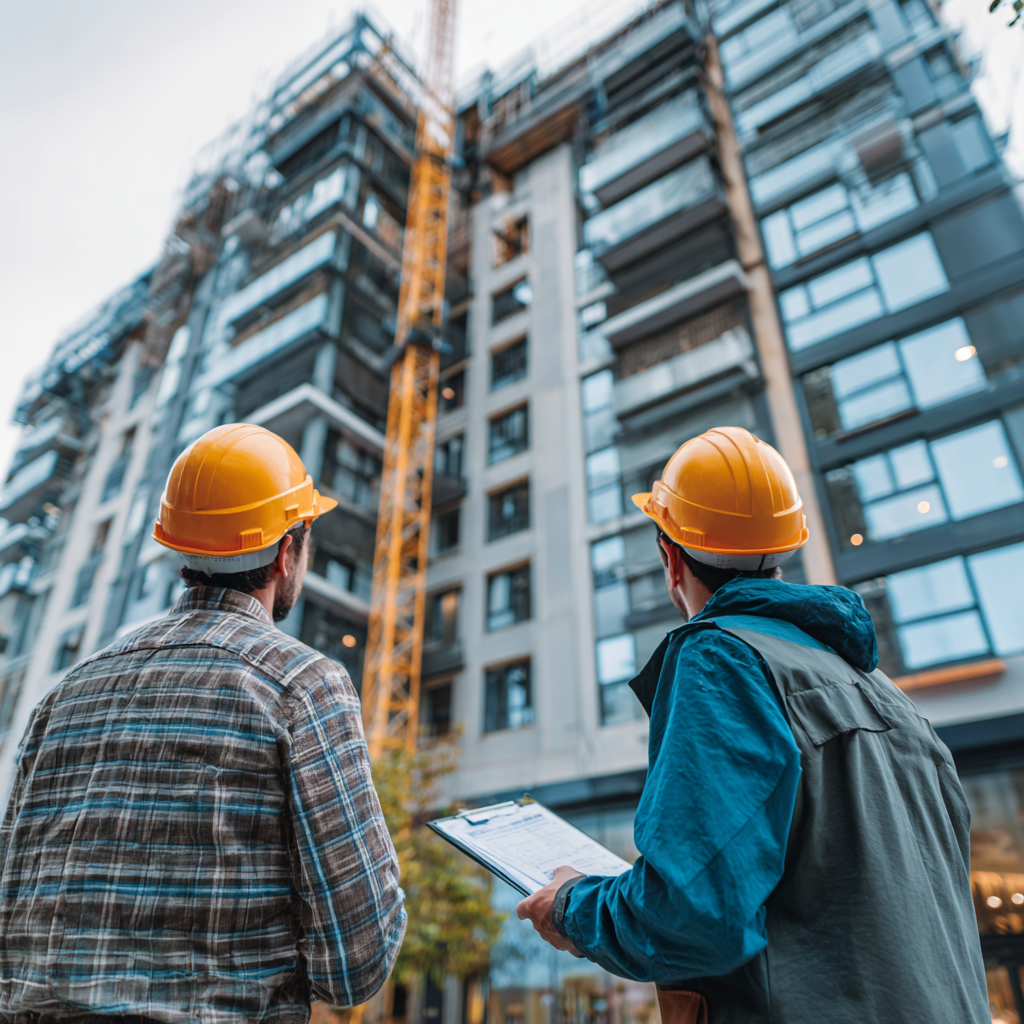
Ever wish you could see the full environmental cost of a building before it’s built? A Building Life Cycle Assessment (BLCA) does exactly that—revealing the carbon and environmental footprint of your project from raw materials to demolition.
When design teams skip this step, they often overlook the largest piece of a building’s total emissions: embodied carbon. Without visibility into where impacts occur, it’s nearly impossible to make meaningful reductions or compare materials on more than cost alone.
A BLCA gives you the data to make informed, measurable choices—whether you’re designing new construction, renovating an existing facility, or pursuing certification.
With Emerald Built Environments, A Crete United Company, you get more than numbers on a page. Our team helps you interpret the results and turn insights into practical design and material strategies that reduce embodied carbon, support compliance, and position your project for long-term sustainability success.
What Is A Building Life Cycle Assessment (BLCA)?

A Building Life Cycle Assessment evaluates the total environmental impact of a building across its entire lifespan—from raw material extraction and manufacturing to construction, operation, and end-of-life.
By quantifying embodied carbon and other key impact categories, a BLCA gives owners, architects, and design teams a clear picture of where emissions come from—and where they can be reduced.
When integrated early in design, it becomes a powerful decision-making tool that helps balance cost, performance, and sustainability outcomes before a single material is ordered.
When Should You Conduct a BLCA?
The earlier, the better.
A BLCA delivers the most value when integrated into the design phase—before materials are selected or construction begins. That’s when the results can directly influence decisions about structure, systems, and specifications.
But it’s never too late to use the data. For existing buildings or projects already in motion, a BLCA can guide renovations, evaluate material substitutions, or support carbon reduction and offset strategies. Whether you’re designing new or improving what’s already built, it’s a key tool for lowering embodied carbon and documenting measurable progress.
What Are the Benefits of a BLCA?

Reduced Embodied Carbon
Identify and mitigate high-impact materials before construction begins.

Smarter Material Selection
Optimize for sustainability by choosing recycled, bio-based, or low-emission materials.

Lower Environmental Footprint
Address transportation, energy, and waste reduction to minimize total emissions.

Improved Project Certifications
Supports LEED, WELL, and other green building standards.
Learn More in Our Blogs
Understanding your building’s embodied carbon is just the start. Explore how material choices, certifications, and lifecycle strategies all connect to create healthier, higher-performing buildings. These resources from Emerald Built Environments dive deeper into the why and how of sustainable design—and what it means for your next project.
.jpeg?width=1109&height=647&name=bigstock-Building-Stages-Of-Sky-Scraper-459605757%20(1).jpeg)
The Journey of a Sustainable Building
As the world takes action to reduce global greenhouse gas emissions, many tactics are lumped under the term “sustainability”. Investors, developers, and communities are starting to demand more ethical and environmental practices from businesses.

The Emissions DNA of Building Materials: Embodied Carbon
When considering Scope 1 and 2 emissions, most people think of the impact of energy use for heating, lighting, and transportation.
-1.jpeg?width=1220&height=711&name=bigstock-Green-House-And-Money-On-The-S-432586802%20(1)-1.jpeg)
Fact Check: Does LEED Really Cost More?
Let us first state the obvious: Yes, it costs money to achieve LEED certification for a building - just like it costs money to achieve any other sustainable building certification.
A Building Life Cycle Assessment is more than just a report—it’s a roadmap to a lower-carbon future. By integrating BLCA into your project, you can make data-driven decisions that lead to greener, more efficient buildings.
Let Emerald Built Environments, A Crete United Company, guide you toward smarter, greener decisions that will shape your project’s legacy. Contact us now and let’s craft a future that’s as efficient as it is environmentally conscious.