




Client Overview

Our client, Geis Companies, is a prominent design-build industrial contractor in the U.S. with a strong commitment to sustainability. Known for their forward-thinking approach, they attract clients who share a similar focus on sustainability, particularly in the construction of environmentally responsible buildings. Geis engaged Emerald to guide implementation of sustainability goals on a new build for their client, Thermo Fisher Scientific, a biotechnology company.
Project Overview
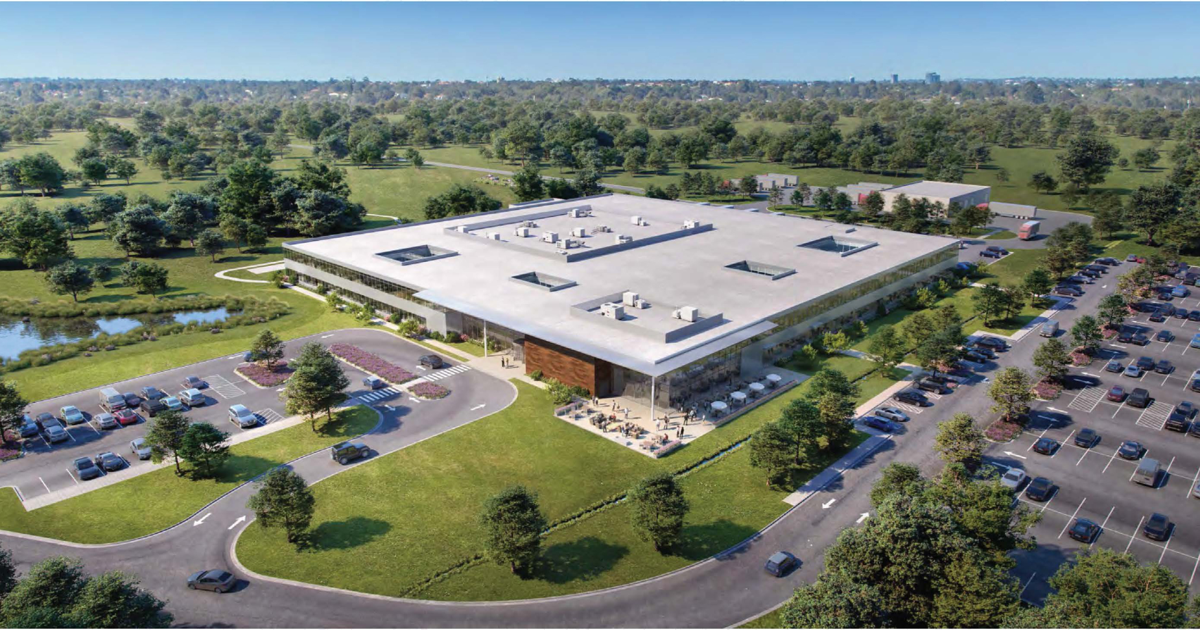
Geis and Thermo Fisher worked together on the design for a new 375,000-square-foot production and warehouse facility. The proposed building consisted primarily of production space with a warehouse, and also included office and support areas. The project was in the construction phase when the sustainability analysis was initiated. The primary goal of the analysis was to validate the design assumptions and build a solid business case for investing in alternative design strategies and systems as part of a strategy to reach net zero carbon.
Challenges
The Opportunity
Client's Goals
Solutions

Strategies Implemented
To tackle these challenges, Emerald employed advanced energy modeling software to simulate the building’s energy performance across a range of scenarios. This innovative approach allowed for precise analysis and optimization, showcasing the incredible capabilities of energy modeling in driving efficient and sustainable building design.

Innovative Approaches
The project incorporated several innovative approaches that set it apart. The building was designed with an insulated pre-cast concrete envelope, which significantly exceeded code requirements and reduced the embodied carbon compared to a traditional tilt-up concrete panel building. The analysis Emerald provided guided Geis to develop an all-electric building, eliminating fossil fuels from all systems. It leverages heat pumps and heat recovery in its efficient HVAC design.
Outcomes

Results Achieved
The analysis led to several important outcomes for Geis’ client. Firstly, it increased their corporate knowledge of the tools necessary to make informed decisions in future projects. The analysis provided affirmation of the impact of their design choices, allowing them to confidently move forward with these strategies.

Impact on Client's Building, Business or Operations
As a result of the project, our client was able to change their processes to incorporate these analytical tools early in the design phase of future projects. This proactive approach allows them to make more informed decisions that align with their sustainability ethos and the demands of their clients.

Environmental Benefits
The project achieved significant environmental benefits, which were meticulously documented. The planned designs resulted in a building that:
- Uses 31% less energy than a standard code-compliant building
- Achieved a reduction of 976.1 metric tons of CO2 equivalent (MTCO2e), which is comparable to the emissions from driving 2.4 million miles or burning 1 million pounds of coal
- Exceeded the 31% Energy Use Intensity (EUI) and GHG reduction targets, in line with 2030 sustainability goals
Moreover, Emerald made further recommendations for enhancing the building’s sustainability. A solar analysis was conducted, demonstrating that the facility could offset all its electric use with on-site solar energy. This finding led our client to offer a ‘net-zero capable shell’ for future sales, showcasing their commitment to delivering buildings that are prepared for a sustainable future.
CONCLUSION
The Net Zero and Embodied Carbon Analysis project for Geis Companies stands as a testament to the power of rigorous sustainability analysis. Through the innovative strategies and tools provided by Emerald, our client not only validated their design decisions for Thermo Fisher but also gained the confidence to implement these strategies in future projects. The environmental benefits achieved underscore the importance of early and comprehensive analysis in meeting and exceeding sustainability goals.