




MAKING CAPITAL WORK SMARTER IN INDUSTRIAL FACILITIES
Strategic, life-cycle–driven capital planning for complex industrial environments
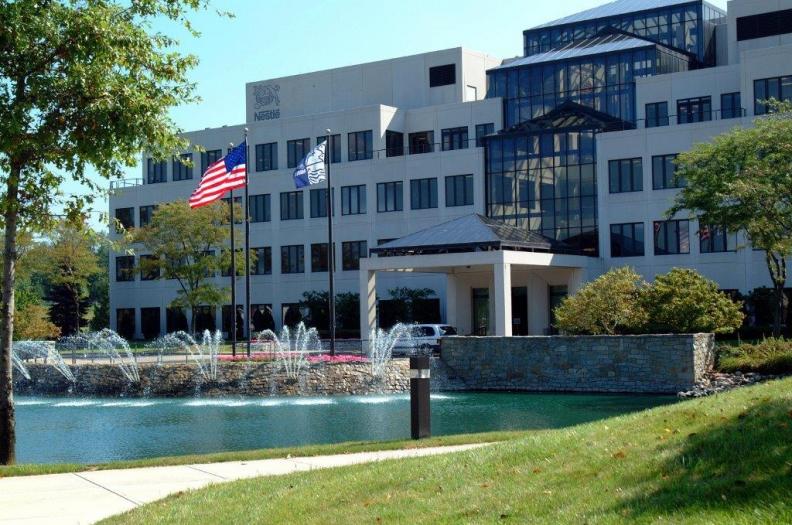
Nestlé’s corporate headquarters in Solon, Ohio faced aging central plant equipment and an impending chiller replacement. Rather than defaulting to a like-for-like replacement, Emerald was engaged to quantify risk, uncover inefficiencies, and develop a financially optimized path forward.
Rather than replacing a chiller first, which would have required oversized equipment, Emerald evaluated how envelope improvements could reduce thermal loads. The result was a smaller, lower-cost chiller, improved comfort, and decades of avoided energy waste. Less total capital, spent in the right order.
The Challenge

Our Approach
Industrial facilities operate under tight margins, complex systems, and unforgiving operational requirements. Capital decisions are often reactive--driven by failing equipment or aging infrastructure. The real risk isn’t the investment, it’s making the wrong investment at the wrong time--or not investing at all. The Cost of Inaction (COI) must be understood in the context of the Return on Investment (ROI).
Emerald helps organizations move from reactive spending to integrated, long-term capital planning. By evaluating assets across a 10–20 year horizon, we reduce total capital spend, right-size future equipment, and prevent decades of unnecessary energy and operational waste. Our analysis includes clarity on the cost of inaction and the return on investment--COI and ROI
Project Overview
Location
Solon, OH
Scope
ASHRAE Level II Audit / Central Plant Evaluation /
Lifecycle & Load Modeling
Benefits
Avoided Oversized CapEx / Reduced COI Risk / Improved Energy Efficiency / Optimized Capital Planning
Nestlé’s corporate headquarters had aging central plant equipment and a chiller replacement on the horizon, but leadership faced a CFO's familiar question: approve capital now or continue to “sweat the asset” without a quantified view of risk and operating leakage. Emerald was brought in to evaluate options beyond a like-for-like replacement. Without a fact base, the default path would have been an oversized chiller sized to yesterday’s loads, locking in avoidable capital spend and higher operating costs for years.
Emerald conducted an ASHRAE Level II audit and life-cycle review to translate technical condition into financial exposure - the Cost of Inaction (COI). The analysis highlighted (1) accelerating maintenance and energy spend, (2) recurring comfort issues that create hidden productivity loss and stakeholder risk, and (3) the downside of an unplanned failure: unbudgeted spend, schedule disruption, and premium-cost procurement. Emerald also confirmed Nestlé was considering major envelope upgrades (windows). Modeling the projects together reframed the decision: completing windows first immediately reduced load (and ongoing energy waste) and right-sized the future chiller to the building’s post-upgrade demand. The result was a finance-ready mini business case: reduced risk of a forced outage-driven purchase, avoided paying for excess capacity, and a sequenced capital plan that reduced total cost while improving comfort--balancing near-term COI risk reduction with long-term ROI.
COI: WHAT INACTION COSTS FINANCE
-
Unbudgeted Spend & Forecast Volatility: An aging chiller increases the probability of a forced, out-of-cycle replacement that bypasses normal capital planning and disrupts budget predictability.
-
Premium-Cost Procurement: Emergency failures tend to drive rush decisions, limited competitive bidding, expedited shipping/labor, and “take what’s available” equipment selection.
-
Operational Disruption Risk (Business Continuity): Cooling is mission-critical; loss of service can create downtime, tenant/ occupant disruption, and reputational/stakeholder impact (even when not directly tied to production).
-
Opex Leakage That Compounds: Continuing to operate deteriorating or oversized systems drives higher maintenance costs and avoidable energy spend that quietly erodes margins.
-
Capex Inefficiency/Stranded Capacity: Replacing first without modeling future loads (e.g., after window/envelope work) risks oversizing--tying up capital in capacity you don’t need and increasing life-of-asset operating cost.
-
Deferred Maintenance/Risk Transfer: “Sweating the asset” effectively shifts risk from a planned capex event to an unplanned opex + disruption event, often at a worse total cost.
Cost of Inaction (COI) is the total business cost of delaying a decision--avoidable operating spend, escalating risk of disruption, and the financial premium of a forced, unplanned replacement. It explains why “waiting” isn’t neutral: it’s a choice that carries a measurable cost and risk exposure.
Proven Results (2017 - Present)
-1.png?width=2274&height=850&name=Untitled%20design%20(59)-1.png)